State and Federal Law - Artifacts
 |  |  |
Guidelines on Indian Artifacts
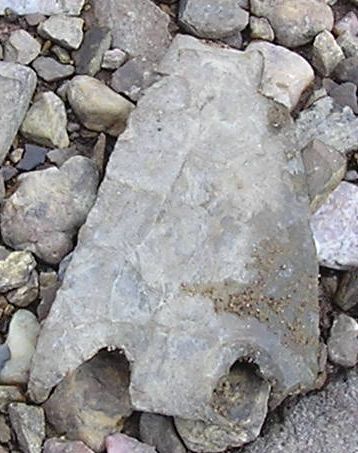
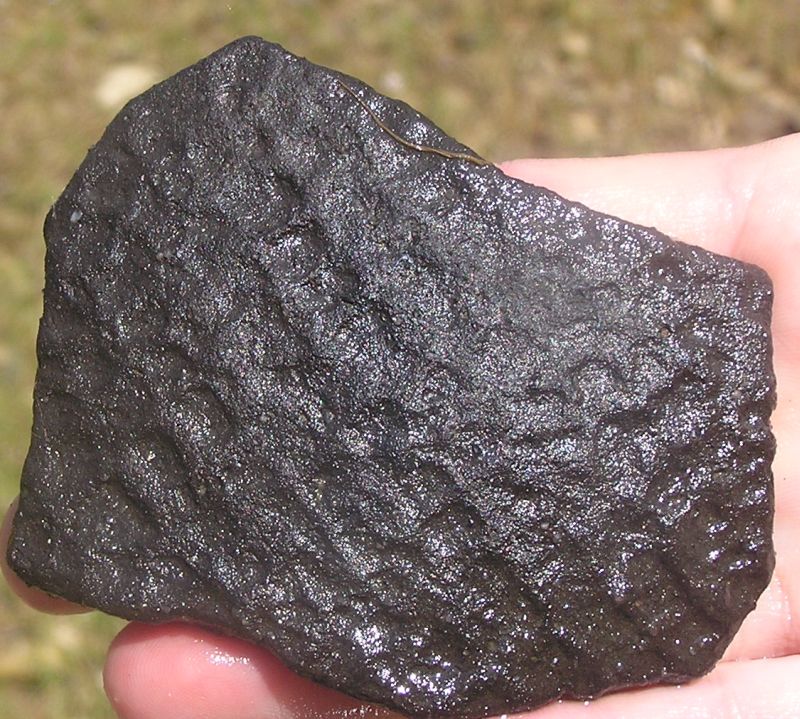
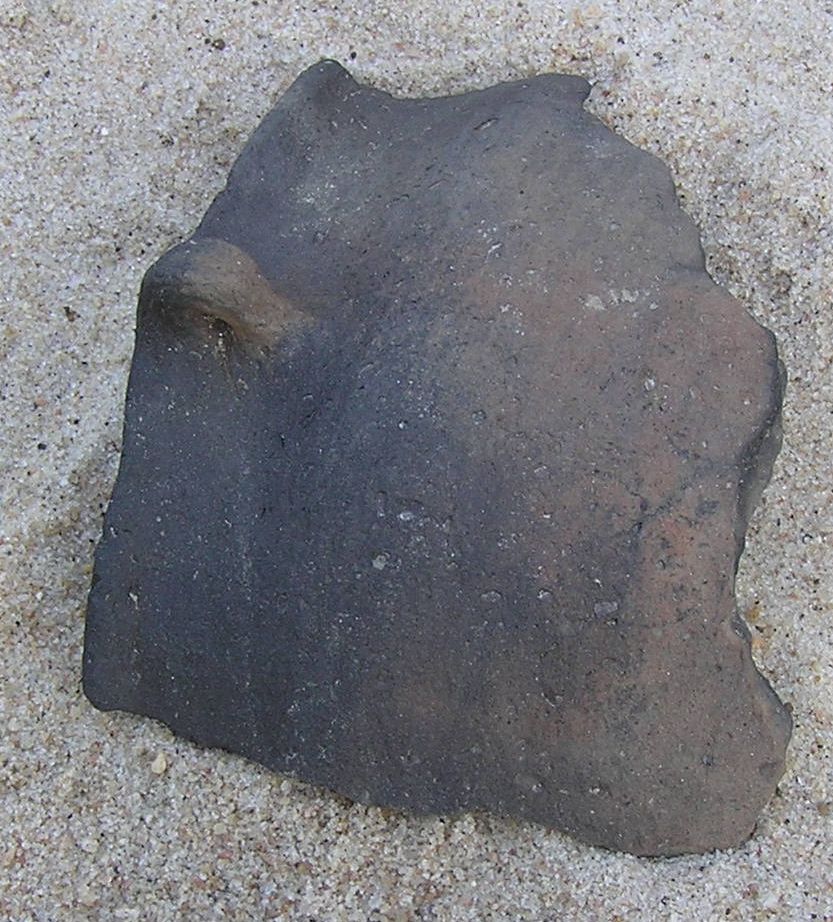
BPS members sometimes find Indian artifacts while searching for fossils, usually near lakes, or in gravel bars and creeks. There are certain guidelines and laws that apply when one finds these artifacts. Eugene Futato of the Office of Archaeological Research provided the following information to help BPS members make decisions regarding finding of artifacts.
University of Alabama - Office of Archaeological Research
Senior Archeologist/Curator - Eugene M. Futato
205 371-8709
General Rules regarding Indian Artifacts in the State of Alabama -
There are different rules depending on whether the artifacts are found on State property, or on private property:
STATE PROPERTY:
1) It is against the law to collect artifacts on state property (such as road right of ways), and would violate laws regarding theft of state property, and the Alabama Antiquities Law. If one collects and transports artifacts across state lines, it would then be a violation of federal laws, including the Archaeological Resources Protection Act.
2) If human remains are found on state property, the Archaeology Research department should be notified so the site can be documented and studied. A permit from the state Historical Commission is required to collect human remains on state property.
PRIVATE PROPERTY:
3) If items are found on private property, the landowner can decide what to do with the artifacts. Even if a site is weathering out into a creek, the landowner is under no obligation to protect the site.
4) When items are found in gravel bars, they are out of context, and have mostly lost their usefulness to archaeologists. There is probably no harm in collecting them, nor would reporting them help researchers, unless the site where they are weathering out is found.
5) If artifacts are found in situ at a site, like on a river or creek bank, the landowner may want to inform the Archaeological Research department.
6) If human remains are found on private property, the Archaeology Research department would very much like to be notified so the site can be documented and studied. However, private landowners are under no obligation to report these sites, though it could prove to be very helpful to researchers.
Code of Alabama
Below is shown the current (2003) Alabama law relating to artifacts. Check The Code of Alabama 1975 state web site for most current version.
Code of Alabama
Title 41 - State Government
Chapter 3 - Aboriginal Mounds, Earthworks and other Antiquities
Section 41-3-1 Reservation of exclusive right and privilege of state to explore, excavate or survey aboriginal mounds, earthworks, burial sites, etc.; state ownership of objects found or located therein declared.
The State of Alabama reserves to itself the exclusive right and privilege of exploring, excavating or surveying, through its authorized officers, agents or employees, all aboriginal mounds and other antiquities, earthworks, ancient or historical forts and burial sites within the State of Alabama, subject to the rights of the owner of the land upon which such antiquities are situated, for agricultural, domestic or industrial purposes, and the ownership of the state is hereby expressly declared in any and all objects whatsoever which may be found or located therein.
Section 41-3-2 Nonresidents not to explore or excavate remains or carry away, etc., from state objects discovered therein, etc.
No person not a resident of the State of Alabama, either by himself personally or through any agent or employee or anyone else acting for such person, shall explore or excavate any of the remains described in Section 41-3-1 or carry or send away from the state any objects which may be discovered therein or which may be taken therefrom or found in the vicinity thereof.
Section 41-3-3 Explorations or excavations of remains not to be done without consent of owner of land and not to injure crops, houses, etc., thereon.
No explorations or excavations shall be made in any of such remains without the consent of the owner of the land first had and obtained and unless such work is done in such way as not to injure any crops, houses or improvements on the land adjacent to or forming a part of such remains.
Section 41-3-4 Explorations or excavations not to destroy, deface, etc., remains; restoration of remains after explorations or excavations.
No explorations or excavations shall be made which will destroy, deface or permanently injure such remains; and, after any such explorations or excavations, they shall be restored to the same or like condition as before such explorations or excavations were made.
Section 41-3-5 Disposition of objects taken from remains.
No objects taken from such remains shall be sold or disposed of out of the state, but when removed therefrom the objects so gathered shall be retained in state custody and either placed in the collection of the Department of Archives and History or in the museums or in the libraries of the educational or other institutions of the state or they may be exchanged for similar or other objects from other states, museums, libraries or individuals.
Section 41-3-6 Exploration or excavation of aboriginal mounds, earthworks, etc., contrary to law.
Any person who shall explore or excavate any of the aboriginal mounds, earthworks or other antiquities of this state contrary to the laws of this state shall be guilty of a misdemeanor and, upon conviction, shall be fined not more than $1,000.00 for each offense.
Federal Laws
The Archaeological Resources Protection Act of 1979 (also known as 16 U.S.C. 470) was enacted to protect archaeological resources on public (Federal) lands and Indian lands, such as reservations and National Forests.